Pages

Minnesota. Part 3

Boardwalk at Scenic Park
After our quick change of itinerary, due to the NE Minnesota and Canadian wildfires, we arrived for a few days at Scenic State Park. Walking along the wooden boardwalk perched along the edge of Coon Lake, we heard the eerie, haunting call of the common loon. A couple of black dots at the far side of the lake seemed to be the source. 

Utilizing our kayak dolly, we transported our kayaks from our campsite to the nearby boat launch. Paddling out into the lake with a camera and fishing gear, we were seeking the elusive loons and the difficult-to-catch walleye. Though the loons, or what we thought were loons, always stayed a few hundred yards away, we did succeed in catching dinner. We didn't catch the walleye, we were hoping for, but a couple of small-mouthed bass. Staying out on the water for several hours, we came upon a pair of tundra swan swimming along the shore. While trying to snap a shot, a boat rounded the corner of our secluded bay making the beautiful birds take flight. It was a special experience for Alan as they flew a few feet over his head. 

Exploring the park by bike, we discovered the historic lodge. This log structure is a classic
Tundra Swan
example of the rustic-style work of the Depression-era Civilian Conservation Corp (CCC). The building was closed during our visit, as many visitor centers have been during our travels this summer. (I’m assuming due to Covid-19). But also, this structure was surrounded by multiple sprinklers and fire hoses, in anticipation, perhaps, of fires that might start near or move to this park. 

A few trails are scattered throughout the park.  
One morning, we explored the Chase Point Trail nestled between the Coon and Sandwick Lakes. Threats of rain and distant thunder cut our walk short and we arrived back at camp a few moments before the skies opened. Wildlife sightings for the park included red-tailed squirrels, chipmunks, and marmots. Though signs warned of bears in the area, we didn’t see or hear of any during our visit. They were definitely not part of the wildlife we wanted to meet on our hike.

On our final day in the park, we spotted 2 loons, as well as a small flock of tundra swans, at the
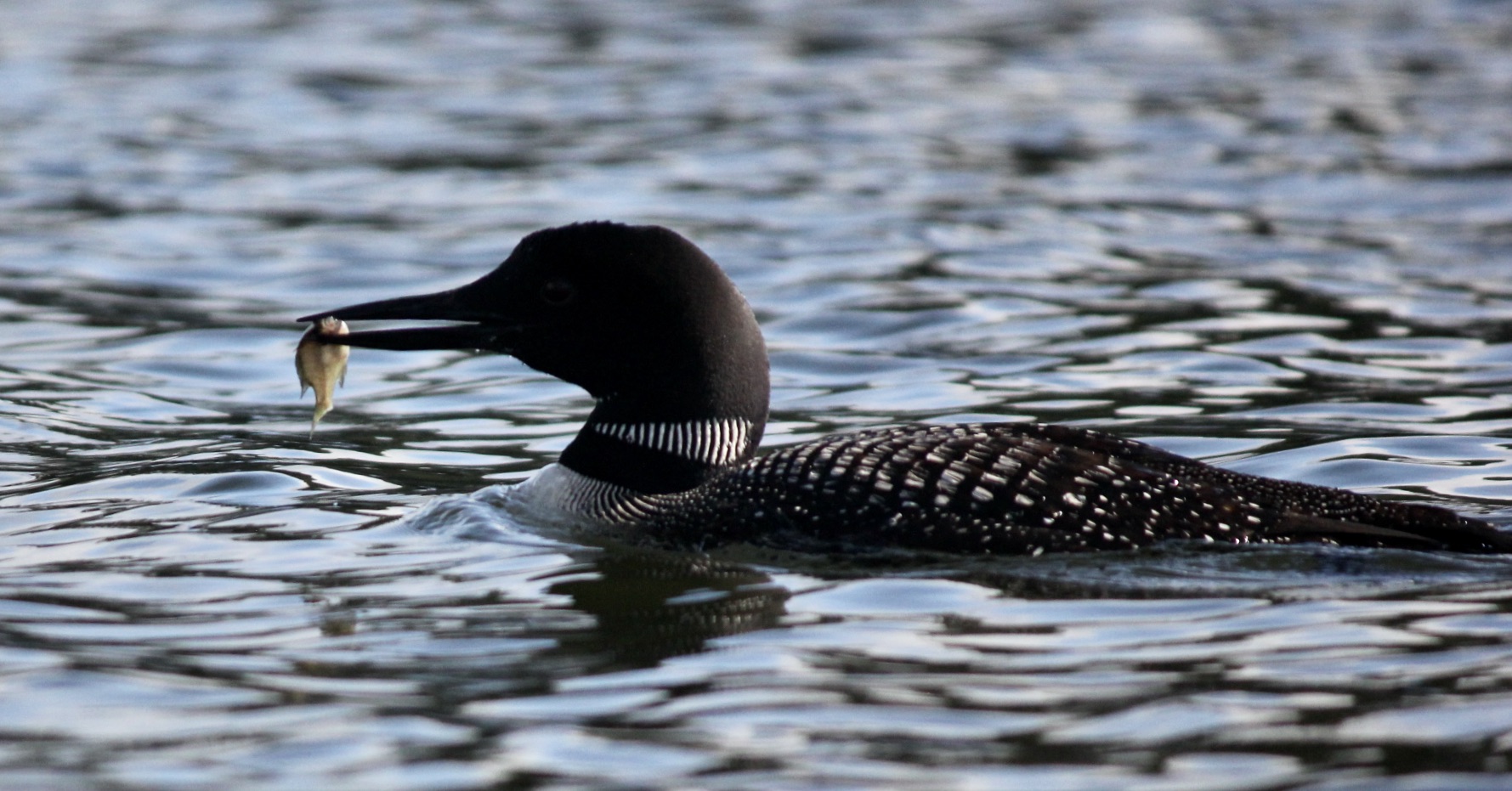
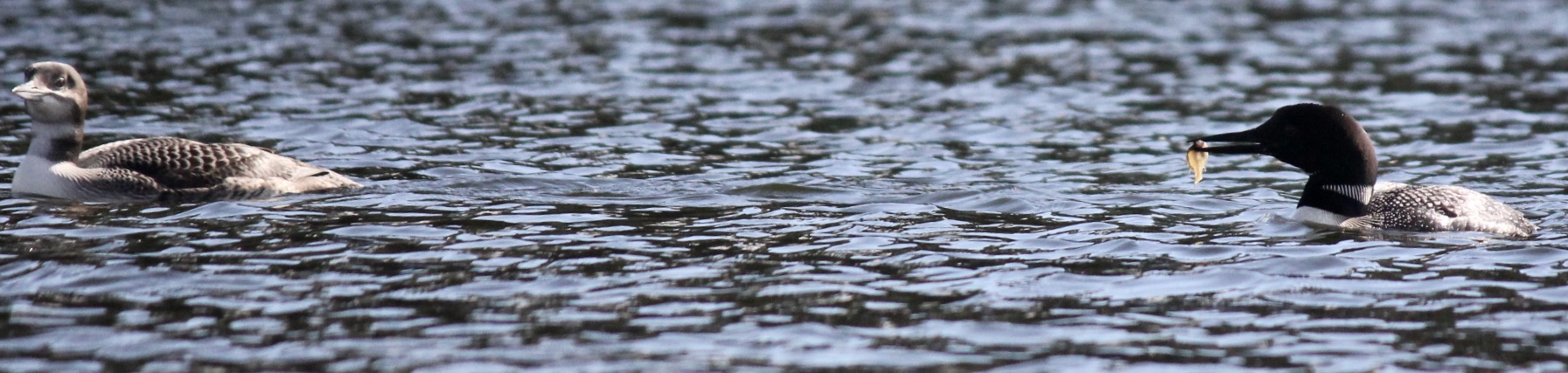
opposite side of Coon Lake. This time we launched the kayaks leaving our fishing gear behind. Paddling silently across the lake, we were able to approach the adult and juvenile loon and snap a few shots. The parent (male and female loons look the same) approached the younger loon with breakfast as we looked on. Meanwhile, the swans, startled by a canoe, took flight. The outing had been an awesome success. 

Falls along the St. Louis River

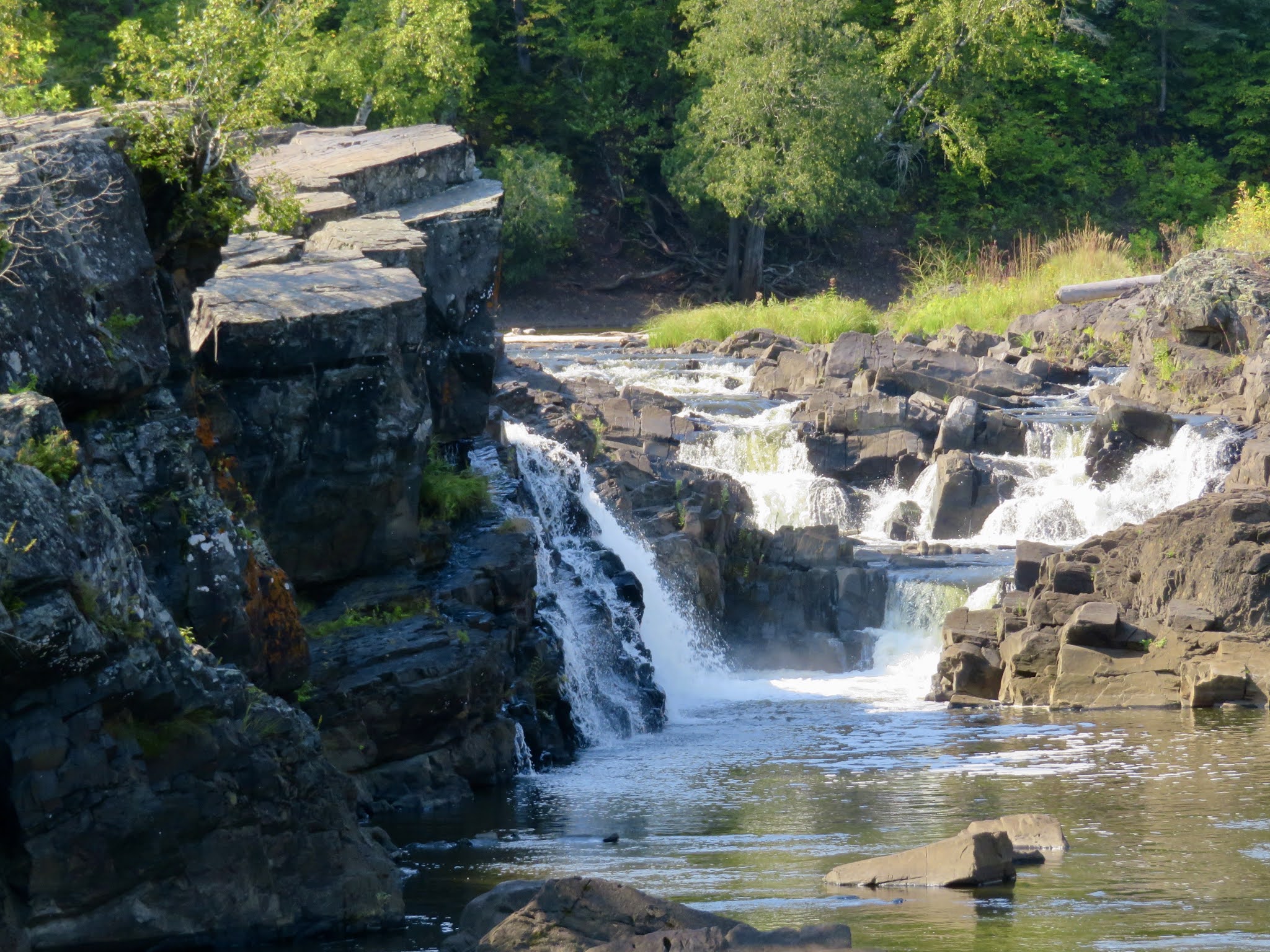
Continuing to move south, we headed to one of the most popular parks in Minnesota, the Jay Cooke State Park near Duluth. Its ”swinging bridge”, which crosses the St. Louis River, was built by the CCC.  Despite the name, the bridge does not swing, but it does provide gorgeous views of the falls upriver and dramatic and unique rock formations along the riverbed. Hiking along the Silver Creek Trail and dropping down to the River Trail spur, we were along the water for most of the walk as we passed through a forest of birch, basswood, and spruce. The next day, we took the shorter CCC trail which offers a level, grassy walk along the river. 

As rains, high humidity, and cool temperatures (40s and 50s overnight) helped the hundreds of firefighters, loggers, and volunteers fight the fires in the state, we were able to pivot back along the North Shore Drive. While the Boundary Water Area remained closed, and will not be a part of this trip, the air quality index for the coastal areas was excellent, so we headed north.

View along the River Trail
The "Swinging Bridge"


Historic CCC lodge

Five tundra swan on takeoff

Waterfalls along the St. Louis River

Tundra Swan

Reflections at Coon Lake

Minnesota. Part 2

Carnivorous pitcher plant
Driving northwest, we were headed to the Lake of the Woods area.  Stopping in Big Bog State Recreation Area for a couple of nights, we were greeted by a sorely needed downpour.  Though not nearly enough to dent the severe drought conditions, we did experience about an inch of rain. 

Big Bog is divided into two parts.  We were camped in the smaller Southern Unit near the slow-moving, muddy Tamarac River.  The river flows into the Upper Red Lake and is known for it’s known for boating and fishing, but we really didn’t think we’d want to eat any fish coming out of this water.  The critical drought conditions surely accounted for the river’s current poor condition.


The Northern Unit of the Park, located 7 miles north of the campground, includes Lake Ludlow

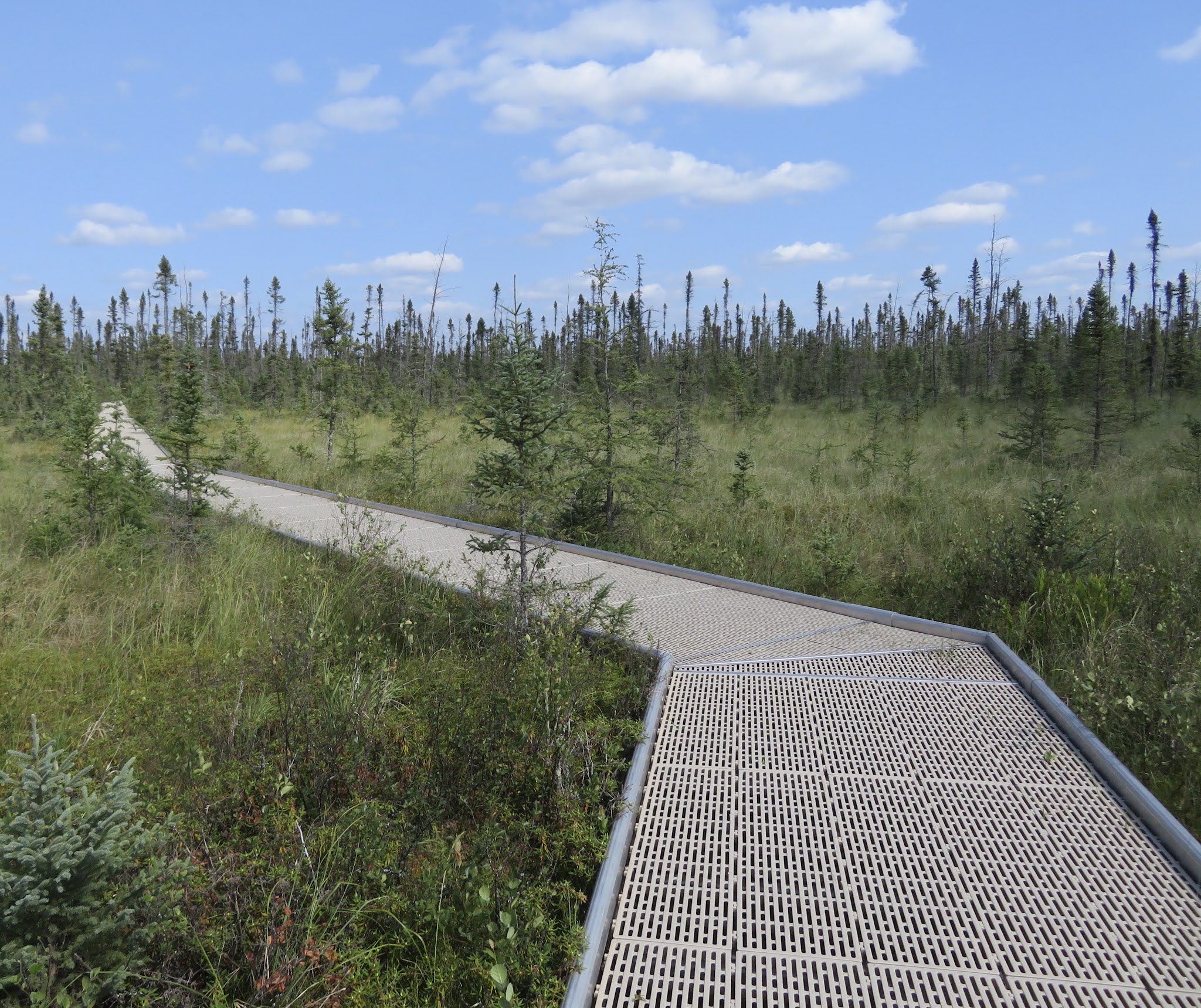
Along the boardwalk
and a one-mile boardwalk over a tiny portion of the 500-square-mile peat bog.  The plastic grating that forms the boardwalk allows sunlight to reach the plants under the walk.  Numerous orchid species flourish in the bog in the early summer, but by August they have disappeared.  We did, however, see hundreds of the insect-consuming pitcher plants.  Bacteria and plant enzymes digest the bugs that become trapped in the plants.  In the late 1800s, farmers tried to tame the bog by creating canals through the peatlands.  But, the bog is an acidic and nutrient-poor wetland and attempts at farming were a dismal failure. 


Continuing to head northwesterly, we settled for a couple of nights at the town of Roseau’s campground.  On our arrival, and on subsequent outings, we took advantage of multiple bike trails around town.  One trail led us through a freshly harvested hayfield.  


Sno-cat #2
This small town of 2700 is home to Polaris Industries.  The company produces snowmobiles, all-terrain vehicles, motorcycles, and military vehicles.  They are said to employ 1500 residents, so this is a true company town.  Though tours of the factory are offered daily, we opted instead for a visit to the Polaris Experience Center.  The Center tells the story of the company that's been an integral part of this town since its inception in 1956.  From the second snowmobile ever made (the first was destroyed in a fire), to historic photos, and product displays, this tour through the company's history provides an intimate overview of the company’s founders and their challenges.  The woman showing us through the exhibit had first started working for the company in 1965 and still maintained her excitement for the company and its products. 


Driving east to Baudette, the “Walleye Capital of the World”, we secured a campsite in the

31' northern pike
 Timber Mill Community Park.  The USA/Canadian Border was located along the Rainy River that ran fifty yards behind our site.  We had this lovely little park to ourselves.  A dock along the river provided the opportunity to try for walleye.  I had given up on fishing for the day, but within a few minutes of my departure Alan reeled in a 31” northern pike.  Along this river, that meant the fish fell within the slot that required his return to the water.  But, not long after returning the pike, he caught a 16” small-mouthed bass.  So our dinner menu was planned.    


Biking into town, we visited the Bay Front Park. This is the home of Willie Walleye, the 40-foot, 2.5-ton “ambassador” for Lake of the Woods.  Willie has overlooked Baudette Bay since 1959.


Rainy River at Franz Javne SP
Traveling east the following day, we stopped for a night at Franz Javne State Park.  At 118 acres, it is Minnesota’s smallest state park.  Walleye continued to evade us but we caught a half dozen or so small-mouthed bass but released them all.  Once again, we had the whole park to ourselves.  This time though, our campsite provided a view of the Rainy River.  


Smoke from multiple fires, we had been monitoring, in northeastern Minnesota, Manitoba, and Ontario began converging on the area.  Though our original plan was to travel further east into the Boundary Water Canoe Area Wilderness (BWCAW), we segued to the south.  The USDA Forest Service had closed access to and camps within the BWCAW, and the only road between the BWACW gateway town of Ely and North Shore Drive, our next intended destination, was closed as fires crossed the highway.  Our next destination, Scenic State Park. 

Pitcher Plant flower


With Willie Walleye


Minnesota Part 1

Along the bike trail in St. Croix SP
Be careful what you wish for…

After experiencing the daily, heavy rains in Wisconsin, we were surprised to find the opposite situation on our arrival in neighboring Minnesota.  This adjacent state was experiencing an extreme drought, and there was a statewide ban on not only campfires but charcoal grill fires as well.  At the time of our arrival, there were almost 100 wildfires burning in the state.  Luckily, most of them were smaller, but the tinderbox conditions were ripe for dangerous expansion.  Staying at the state’s largest park, St. Croix, for a couple of nights, we were situated in the central east coast region.  


St. Croix River
Initially, this park was developed by the Civilian Conservation Corp (CCC) as a recreational area in the early 1930s.  Extensive paved bike trails meandered through the park offering riverfront views or overlooks of wildflowers, grasses, pine, oak, and birch.  Though our campsite was located fairly close to the St. Croix River, kayaking upstream was something we decided against and the only service for down water pickup was closed.  Biking several times during our stay, we were able to cover a fairly large area, but only a drop in the bucket of the 127 miles of varied trails offered.


Moose Lake State Park was full but we found a site at the nearby Moose Lake City Park overlooking the lake.  On our arrival, brisk winds kept us off the water, but the following morning we headed out with fishing gear in hand.  Shortly after our departure from the beach, the winds began to build.  Even in a hidden cove, the current was strong and the fish were not cooperating.  With winds increasing to15-20 mph and white caps forming, the kayaking became more challenging.  Working back across the lake, we had water breaking over the bow of the kayaks but arrived safely back to the shore.


Morning light over Lake Shumway
At Savanna Portage State Park, we found a rustic site, no electricity or water, so we roughed it for a few days.  Of course, with the travel trailer, we aren’t really roughing it.  We just lose the niceties like AC.  Though there are 4 lakes located within the park, we were within a thousand feet of Lake Shumway, so that was our lake of choice.  On our first outing, I caught one largemouth bass and lost the proverbial “big one” that broke the line and got away.  On our second outing, Alan hit a bass honey hole and reeled in 4, and lost 2 within a few minutes.  I pulled in the largest bass for the day at around 3 pounds.  A lovely trail wraps around Shumway and offers a bog trail offshoot that provides walkways over the peatlands.  Though we considered the presence of bears on our walk, we hadn’t seen signs within the park warning of their presence and assumed since they did not offer bear-proof garbage cans that there must be no bears in the area.  Thankfully, we did not see one during our walk, but the following morning one of our neighbors told us of his encounter with a black bear the previous evening as he made a middle of the night visit to the restrooms.


Heading next into Grand Rapids, we needed to restock groceries and books, and get Alan’s

Mural in Grand Rapids
bike’s flat tire fixed.  Securing a campsite at a private RV park, we had a spot that overlooked a small lake.  We were able to catch up on emails and communicating with friends and family.  As we travel, we are frequently in areas where we have no ability to communicate with the outside world.  With no internet or phone service in many locations, it has been difficult to plan and secure reservations for our upcoming travels. 


Alan on the Paul Bunyan Trail
Moving to Lake Bemidji State Park for 3 nights, we took advantage of the park’s bike trails.  A 6-mile portion of the Paul Bunyan State Trail (112 miles total), runs through the park. Located 5 miles north of the town of Bemidji, we visited this town a couple of times.  Because Lake Bemidji is the northernmost lake feeding the Mississippi River, the town is nicknamed “The First City of the Mississippi”.   Considered the birthplace of Paul Bunyan, an 18-foot statue of the legendary figure, along with Babe the Blue Ox, is located in the center of town near the Visitor Center and near the shores of Lake Bemidji.  The sculptures have graced the waterfront since 1937 when the work was commissioned as a tourist attraction.  It is said to be one of the most photographed sites in the U.S.  In addition to Paul’s statue, over 25 murals and sculptures are featured throughout the downtown business area.


Alan's walleye!
Before departing the area, we embarked on a guided night fishing outing.  Walleye was the prize being sought. Meeting up with our guide, Josh, at Cass Lake, we headed out, in time to catch a beautiful sunset over the lake.  Fishing started strong with each of us catching a northern pike soon after leaving the dock, but both were returned to the water.  With Josh’s sophisticated fish-finding equipment, we could see the walleye we sought, but we were not catching them.  Hours later, Alan pulled in a 23” walleye.


Now, we will continue moving northwest. 

Sunset on Cass Lake

Alan with Paul and Babe the Blue Ox

Beach at Lake Bemidji at the State Park
Sculpture by Wanda Odegard near Lake Bemidji 


Sundew along the bog trail at Lake Shumway

Pileated woodpecker along the Paul Bunyan Trail

Black squirrel at St. Croix SP

Passing Through Wisconsin

Yellowstone Lake
Limited availability of campsites in Wisconsin State Parks provided us with only one night at Yellowstone Lake SP.  Though the lake is stocked with game fish, we failed to take advantage.  Iffy weather and unfortunate timing, throughout our travels in Wisconsin, put a damper on activities.


The afternoon of our arrival at Mirror Lake State Park, we scoped out the park enjoying lovely weather.  Kayaking was on the agenda for the following morning, but awakening to a heavy downpour put a halt to those plans.


Moving on to Chippewa Falls, we were able to secure a very soggy campsite in a private campground.  Once again, the nearby Lake Wissota SP was full.   


Plans for an outdoor concert at the local Harley Davidson dealer, as a forerunner to the massive Sturgis bike week, was scheduled for Saturday evening, rain or shine.  The event featured country-rocker, Chris Kroeze.  But, our plans were squelched as torrential rain and lightning moved in.  


The following morning as the rains ceased and the sun finally appeared, we explored the town. Our first stop, Riverfront Park, is located on the Chippewa River and a dam in the center of town.  The dam creates the only ”falls” for the community. 


Producing the Leinenkugel craft beer in the area since 1867, the brewery provides a popular tourist spot.  The Leinenkugel family were German immigrants, arriving in the logging town of Chippewa Falls in 1845.  Tours and tastings (for a price) draw hundreds of visitors daily.  Their product is distributed nationally but is heavily promoted regionally. 


The nearby Irvine park was a large, meandering city park offering everything from a small zoo to a skate park.  During our Sunday visit, the park was packed with families and a church picnic.


Olson’s Ice Cream on Bridge St. has been creating home-churned treats since 1944.  So in the interest of checking out and supporting locally made products and businesses, we had to purchase a couple of scoops.  We also visited Sokup’s Market and Jacobson’s Butcher Shop to stock up on freshly made sausage and some of Wisconsin’s finest cheese.  The business names in the community reflect the diverse heritage of the town’s residents.


After being skunked by the rains Saturday evening, we were looking forward to a Sunday evening concert at Riverfront Park.  Once again the event was rained out.  We decided to move on from Wisconsin into Minnesota hoping to dry out a bit.

Wildlife mural under a bridge in Chippewa Falls
At the brewery

At Mirror Lake State Park

At Lake Wissota State Park

Passing through Illinois

At Crab Orchard Lake
Starting our trip through Illinois still on crutches and a foot boot put a damper on our typical activities. Thankfully, the injuries were minor and recovery speedy but initially we did a lot of nothing.  Camping at Crab Orchard Lake NWR for a few nights and a couple days at Rend Lake Army Corp of Engineers Park were perfect for some serious hanging out.  Our days were spent reading, researching things to come, and zoning out, for hours at a time, looking over the water.  Canadian geese, blue herons, and a bald eagle graced the waters at Crab Orchard.

Ramsey Lake State Park provided a campsite on a bluff with a beautiful view overlooking the lake.  With overnight temperatures dropping into the 50s, we enjoyed a campfire and our first roasted marshmallows of the trip.


At Weldon Springs State Park, we secured a heavily shaded and relatively private campsite.  Exploring the small park (550 acres) by bike, we discovered the Union School, built in 1865 and retired in 1946.  The school now functions as a museum with natural science and historical displays and reminded us of classrooms from our youth.  The focal point for Veteran’s Park Memorial, overlooking the lake, is a sculpture of a pilot, a soldier, and a sailor.  A reminder that ”Freedom is not free.” is engraved at the base.  Hummingbirds were plentiful in the park and we noticed that a number of our camping neighbors came prepared with feeders to draw them closer.  Small patches of prairie land are within the park.  Historically, Illinois consisted of around 22,000,000 acres of prairie.  Today, fewer than 2,500 acres remain.  The lands have been overtaken by agricultural interests, with over 11,000,000 acres of corn and more than 10,000,000 acres of soybean grown in the state. 


Shabbona State Recreation Area is named after an Ottawa Indian chief renowned for his peace-making efforts in the 1800s. Prairie restoration in the park provided lovely fields of grasses and wildflowers as we biked to the lake and marina area.  Though the park is the home of 4 state-
record muskies, we didn’t attempt to challenge any of the records. 


Next, we are moving on to Wisconsin.

Fishing regs at Shabbona SRA

At Ramsey Lake

Unusual butterfly at Weldon Springs

At Shabbona Lake, ready for the influx of weekend visitors from Chicago


Land Between the Lakes (LBL) NRA

Swimming area along Kentucky Lake
The evacuation of around 800 families over decades, some evicted through the federal power of eminent domain, allowed for the construction of multiple dams creating the two lakes and landmass that became this 170,000 acre National Recreation Area.  (Roughly 40 miles long and seven miles wide).  Completed in 1944, Kentucky Lake was built by the Tennessee Valley Authority for flood control and for generating hydroelectricity.  Lake Barkley was finished in 1964 by the Army Corp of Engineers for the same reasons.  Before Lake Barkley was even completed, the area was designated as the Land Between the Lakes NRA by President Kennedy in 1963.  Running from north-central Tennessee into western Kentucky, this area offers a wonderful diversity of outdoor experiences.  With over two dozen campgrounds (from primitive to full service) spread through the park, we had no issue finding a campsite at Hillman Ferry.  
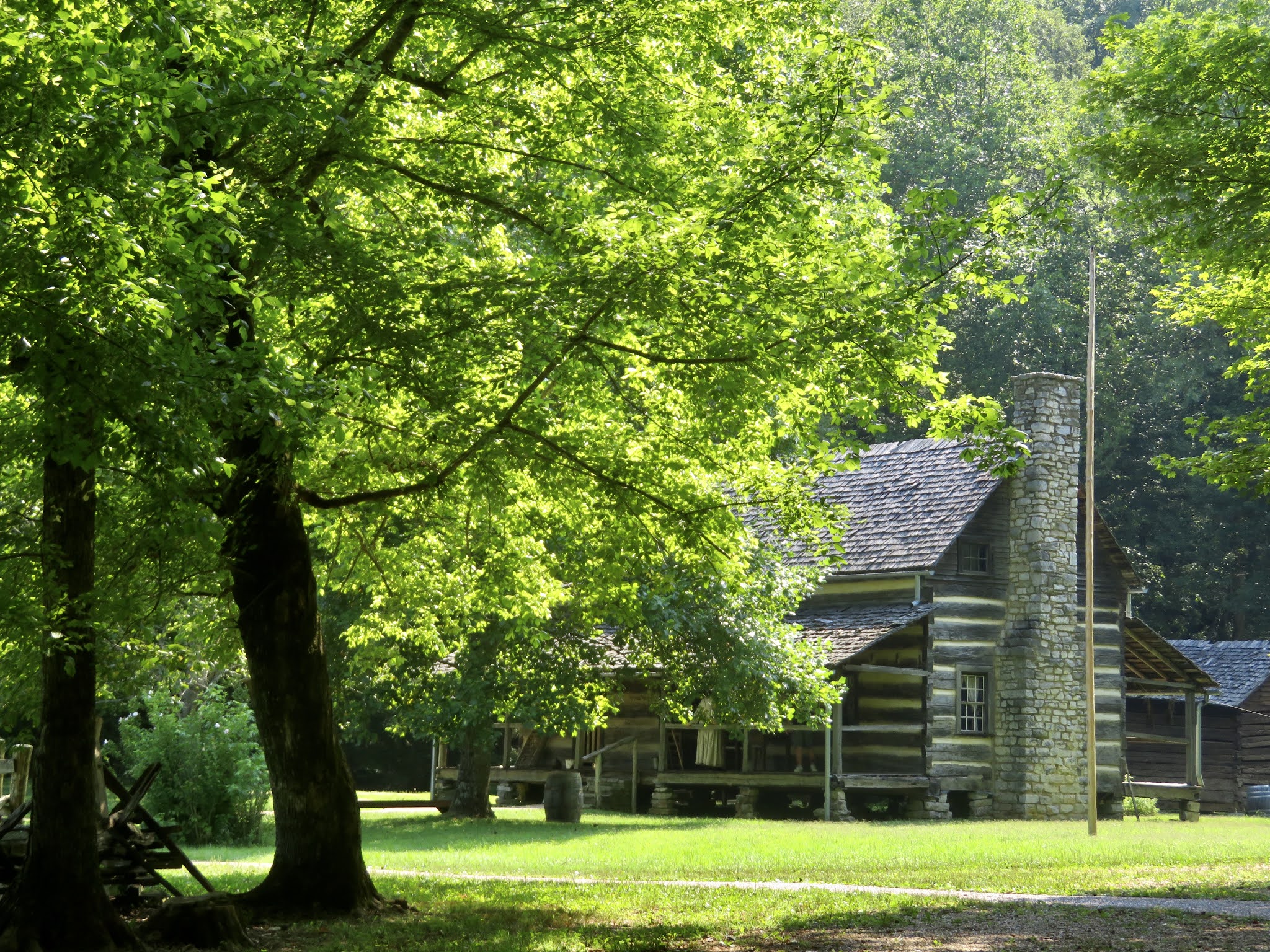
Double pen house from the 1850s

Manned primarily by volunteers, the Homeplace 1850s Working Farm and Living History Museum were a glance back at a two-generation, middle-class family farm.  Dressed in clothing from the era, the volunteers provided a wealth of information about what life would have been like as we moved through the restored historic structures.

Woodland Nature Station is home to a myriad of wild animals who have been injured or orphaned and are not able to survive on their own, ranging from a coyote to multiple owl species.  The Backyard Habitat and Gardens at the Station are planted with native plants, resilient to the heat and cold experienced in this region.  Dozens of hummingbirds were taking advantage of the feeders set up in the gardens.  


Open dawn to dusk, the Elk and Bison Prairie offers the opportunity for visitors to see these magnificent animals.  Historically, vast herds had roamed these lands but were hunted nearly out of existence.  Through a two-decades-long project, the animals were reintroduced and the grounds opened to the public in 1996.  Near sunrise and sunset are the recommended times for success in sighting the animals, especially during the hot summer months when they want to hide in the shade.

Intrigued by the frequent signs for cemeteries along the main road, it turns out that there are 271 cemeteries within the park.  The earliest recorded burial took place in 1811. The USDA Forestry Service maintains the access roads to the gravesites but maintenance of the cemeteries is left to volunteer groups or in some cases to the remaining, dwindling family members.  Over 200 of the cemeteries are small family plots, many containing the graves of infants and children from a time when mortality rates for the young were high.  The graves also reflected the deaths of young women, presumably dying due to childbirth complications, and for the many youthful men killed in wars or as a result of the violent times in which they lived.

We’ve enjoyed our visit here, but we are now heading on to Illinois.
 
Hummingbirds at the Gardens

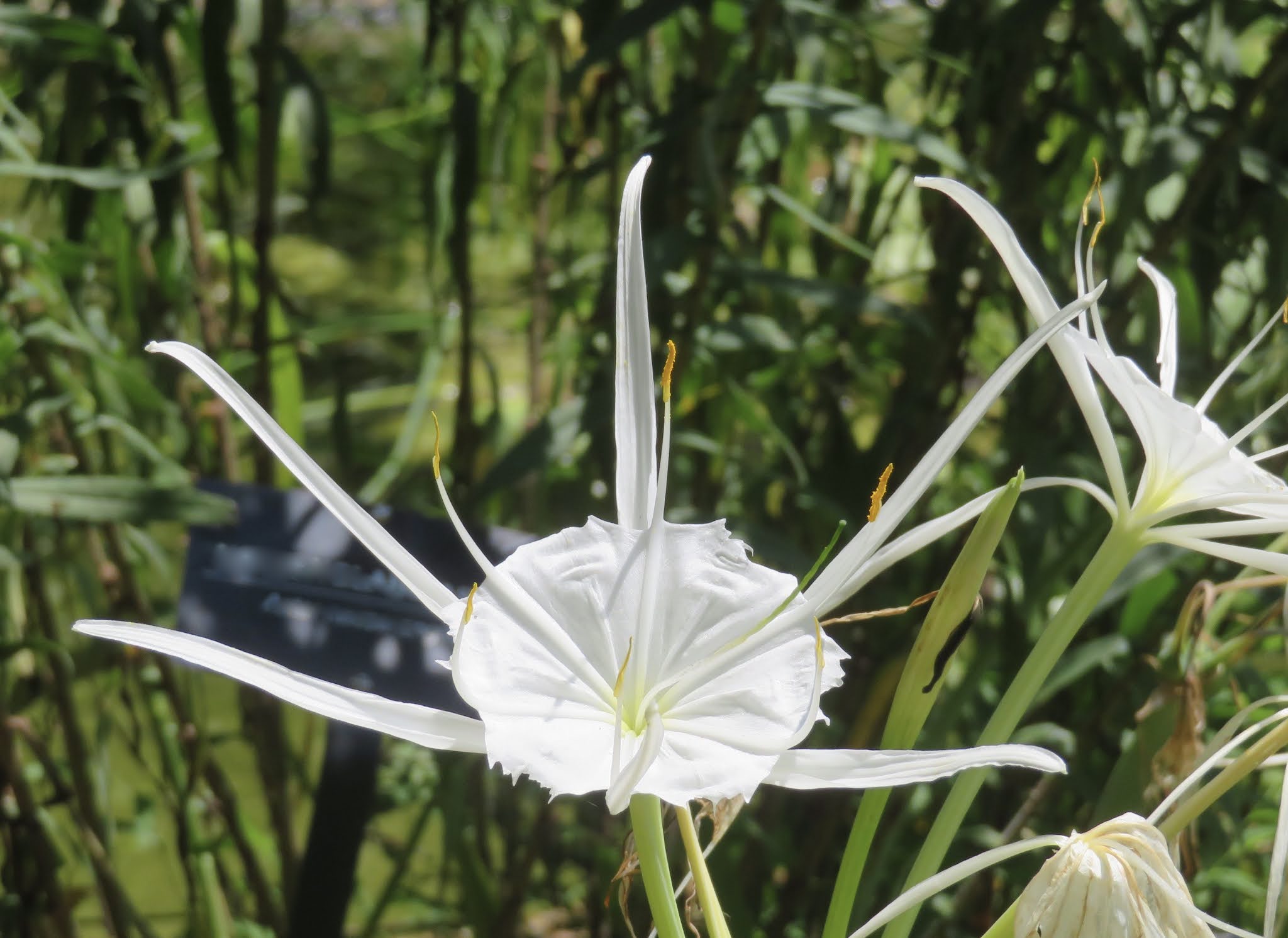
Spider Lily
A rescued red-tailed hawk at the Nature Station