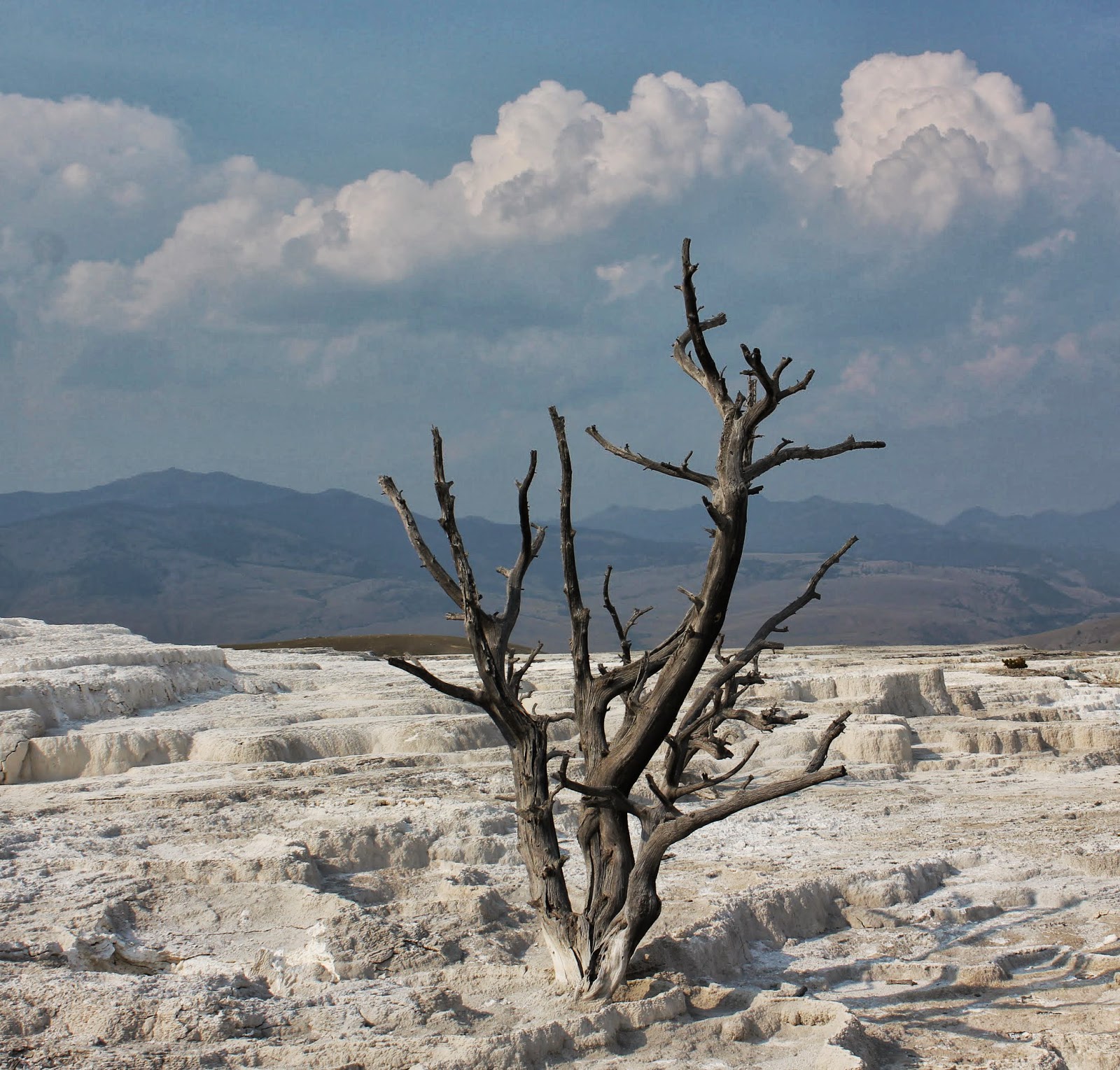
Returning to Yellowstone for my fourth visit and Alan’s
third, we decided to explore some portions we have never seen before. Actually, that’s almost three-fourths of the
park. We always enter at the Western entrance
from Montana and exit through the Southern exit to the Grand Tetons. Concentrating in the past on the geyser basin,
home to Old Faithful, in the southwestern region, we had missed out on so
much.
The park is huge, so trying to explore the entire area is a
daunting task. Stretching over 3749
square miles, it provides a tremendous variety of wildlife and landscape.
 Each year over 3 million people visit Yellowstone; so
competing with crowds can be an issue during the busiest months of July and
August. Traveling in the less popular
areas of the park or outside the peak season can help solve that problem. Also getting out of your car and walking any
of the 1000 miles of trails will get you away from crowds. Our walking consisted primarily of treks to
various rivers with the hope of catching some trout. Alan hammered his previous dry spell by
catching 7 trout within 30 minutes, fishing in a downpour along Soda Butte
Creek. Fishing 50 yards down the creek,
I left empty-handed. Not wanting to be
greedy, we packed up our gear and headed back to camp, where we enjoyed a tasty
fried trout dinner.
Each year over 3 million people visit Yellowstone; so
competing with crowds can be an issue during the busiest months of July and
August. Traveling in the less popular
areas of the park or outside the peak season can help solve that problem. Also getting out of your car and walking any
of the 1000 miles of trails will get you away from crowds. Our walking consisted primarily of treks to
various rivers with the hope of catching some trout. Alan hammered his previous dry spell by
catching 7 trout within 30 minutes, fishing in a downpour along Soda Butte
Creek. Fishing 50 yards down the creek,
I left empty-handed. Not wanting to be
greedy, we packed up our gear and headed back to camp, where we enjoyed a tasty
fried trout dinner.  Grizzly and black bears are present in the park, so heading
out into the wilderness areas needs to done with caution. Posted recommendations suggest groups of 3 or
more, carrying bear spray (which is available in park stores), and talking,
singing or making noise as you walk so the bears will know you are there and
will avoid you.
Grizzly and black bears are present in the park, so heading
out into the wilderness areas needs to done with caution. Posted recommendations suggest groups of 3 or
more, carrying bear spray (which is available in park stores), and talking,
singing or making noise as you walk so the bears will know you are there and
will avoid you.
Putting about 200 miles on the Honda in 3 days, we drove to
the Lamar and Hayden Valleys, to the Grand Canyon of the Yellowstone, over to Mammoth
Hot Springs and down to Norris Geyser Basin.
We were rewarded by seeing countless bison, herds of elk, mule deer,
tundra swans, pronghorn antelope, white-tailed deer, and gorgeous and,
sometimes, bizarre landscape.
 One morning, Alan headed out to do some plein air
watercolors. As he finished painting and packed up his
gear, he walked over Fishing Bridge, and up along the Yellowstone River toward
the Lake. He noticed a bear print,
looking around and across to the other side of the river, he saw the grizzly
lumbering out of the water. Apparently,
this was the same fellow, which had left the prints only moments before. Luckily, Alan got there when he did and not a
few minutes earlier. Also, he had his
point and shoot Canon handy to document the sighting.
One morning, Alan headed out to do some plein air
watercolors. As he finished painting and packed up his
gear, he walked over Fishing Bridge, and up along the Yellowstone River toward
the Lake. He noticed a bear print,
looking around and across to the other side of the river, he saw the grizzly
lumbering out of the water. Apparently,
this was the same fellow, which had left the prints only moments before. Luckily, Alan got there when he did and not a
few minutes earlier. Also, he had his
point and shoot Canon handy to document the sighting.
Our visit was, in a word --- AWESOME.
Traveling quickly to the west, we will soon be along the
coast of Oregon.