Prior to our departure from home, reading about "things to do" in Puerto Rico, Bioluminescent Bay in Vieques had been highlighted. Further research revealed that the new moon phase, which is the best time to visit the Bay, was aligned perfectly with our trip.
Disembarking the cruise ship in Old San Juan, movement through customs was a slow process, but an hour later we met up with the driver we had arranged for our trip to the far eastern end of the island. With plans to visit Vieques and Culebra, small islands accessible by ferry from Fajardo, we went directly to the ferry office on our arrival in town, in order to purchase tickets for the morning. Tickets frequently sell out, and we didn't want to take a chance on not being able to get on the boat for the first leg of our trip. Planes also travel out to the islands, but at $2 pp ($1 for seniors) the ferry is more than reasonable, and only takes about 90 minutes.
Beaches, snorkeling, and fishing are also popular on the island but the luminescence in the bay is
 |
| Alan with 300-year old Ceiba tree |
considered the brightest in the world. Before leaving home, a night kayak trip with Bieque Eco Trips was scheduled.
With a woefully inadequate staging area at the port, chaos reigns temporarily along the waterfront as each ferry arrives. Despite this, we quickly found a taxi and were whisked away to our car rental facility a few miles away. After checking into our room in Esperanza, we grabbed a bite to eat and then started exploring.

For 60 years, the US Navy used a sizable portion of the island as a
training ground and bombing range. But following demonstrations in the late 90s, increased pressures resulted in the Navy withdrawing from the island in May 2003. Much of the land formally held by the Navy became the Vieques National Wildlife Refuge (NWR). Numerous small beach areas are available within the refuge, and on a weekday, we were able to secure a private beach with palm trees and sea grapes providing shade. Luckily, we had rented a jeep from a company that provided a vehicle covered with scratches. On the surface, this may sound strange, but after driving into many of the off-road spots to find the best beach in the NWR, we were happy we didn't need to give any thought to the condition of the jeep.

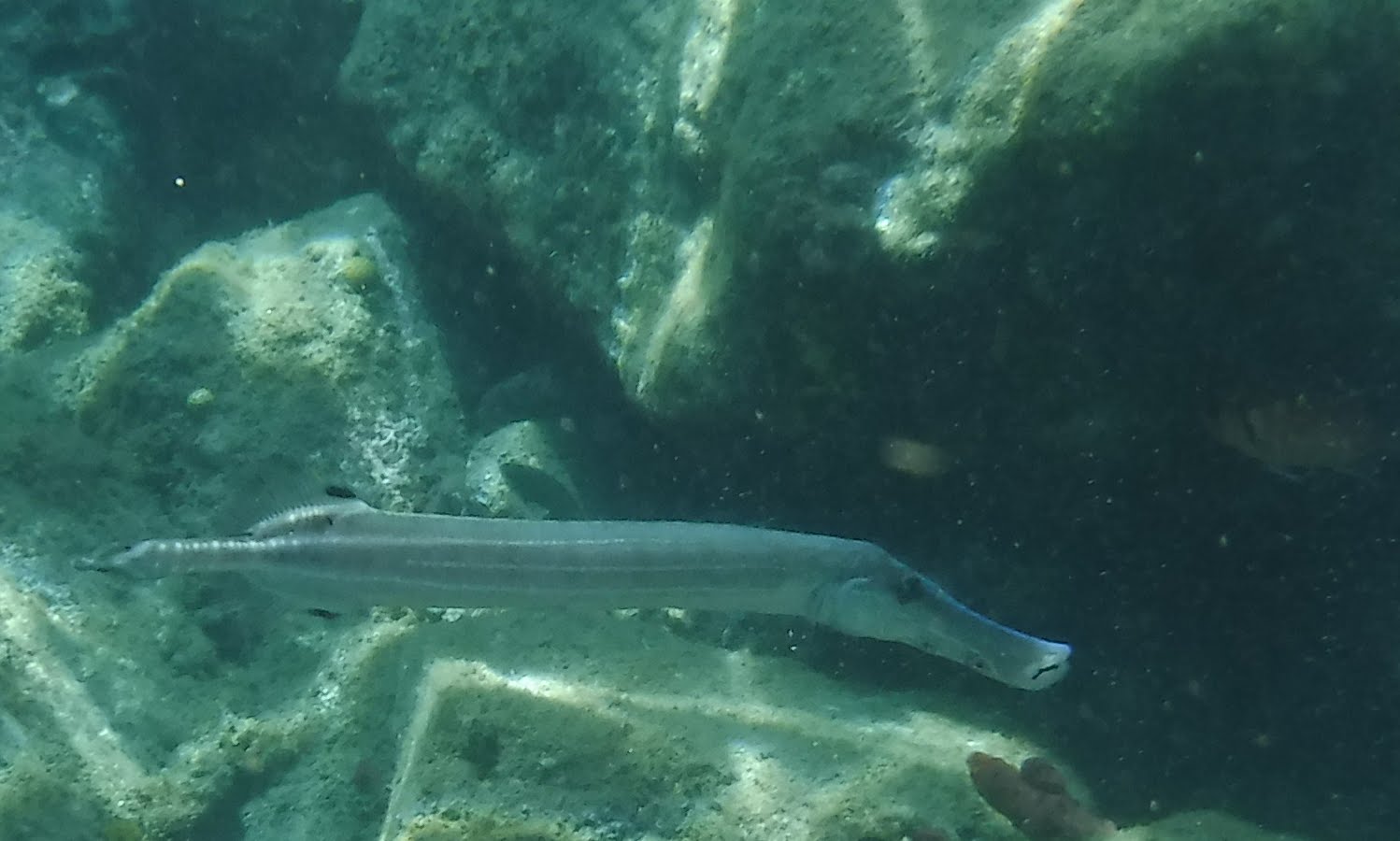
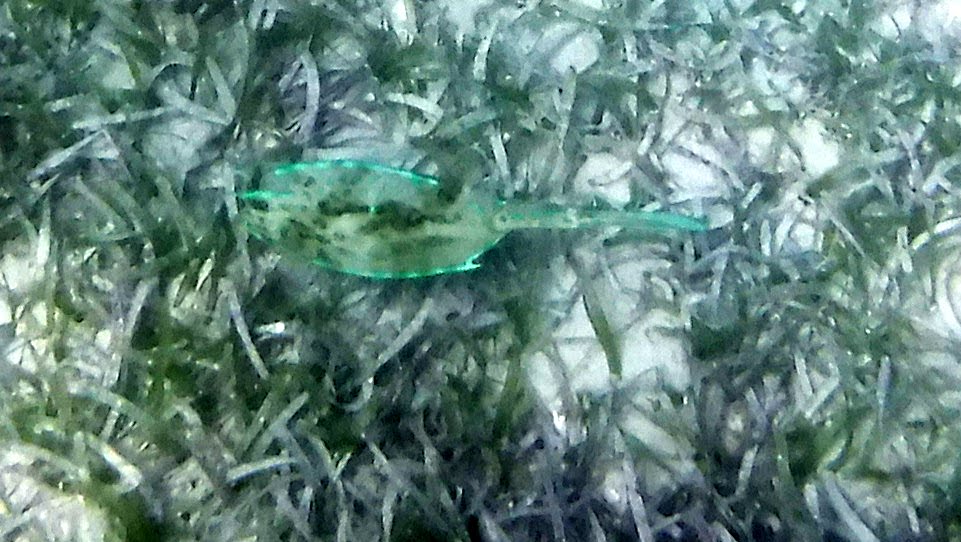
A number of snorkeling spots are available on the island, but the owner of our accommodations recommended Rompeolas Mosquito Pier, on the opposite side of the island, so we headed over there the following day. Built by the Navy in the early 40s, the pier extends 1 mile out into Vieques Sound. The calm, clear water revealed a great variety of sea life. Starfish and turtles are frequently spotted there. We didn't see any turtles but had a unique experience with an octopus. We watched in fascination as the multi-tentacled creature transitioned into a rock-like shape, which totally hid it from view. By the time my camera was lifted into a position to start snapping pictures, the legs were all tucked away, and the only visible portion was the eye, which also quickly disappeared. Amazing!

Horses being ridden, or grazing on the island are a common sight. Several hundred horses make their home here. Though they would appear to be wild, most are privately owned, with brands identifying the owner. Efforts have begun to slowly change this because of health considerations. For the owners, horses roaming free do not need to be fed, housed or cleaned up after, and on the small island, it is easy to locate the horse if it is needed.
 |
| Pier in Esperanza |
On our second night in town, the driver and guide from Bieque's picked us up at the hotel, and we headed out to Bioluminescent Bay. Also known as Mosquito Bay, we were concerned about the possible onslaught of bites, but neither of us was victim to even a single bite. By the time we climbed into our double kayak, the sun had set, and without the help of a discreetly used special flashlight, and walkway embedded with a substance which glowed in the dark, making our way to the water would have been a challenge. Our small group consisted of 2 other couples and our knowledgeable guide. Wearing a glow-in-the-dark pendant and following his voice, we were able to locate our guide in the water. No ambient light is allowed anywhere on the Bay, and on this night there was no moon at all. The experience was magical. Each stroke with the kayak paddle lit up the water. Fish moving through the water looked like shooting stars, and a hand-dipped into the water came up looking as though it was covered with a mini-galaxy. Knocking on the side of the kayak with the paddle would send fish darting through the water, and we enjoyed the neon blue trail as they swam away. Spending about an hour paddling around the Bay, we headed into shore. On land, we received a briefing on the constellations on view for the evening. A cloudless sky and low light pollution provided the best stargazing experience I can remember in many years.

Luminescence in the bay is caused by a micro-organism called dinoflagellates, which glow when the water is disturbed. Our guide discussed the organisms, and research revealed some other facts, but the bottom line is, it is a unique experience, Unfortunately, photography of the phenomenon is very challenging. After attempting time-lapse, video and use of a high ISO in an attempt to capture photos, I gave up and have to hold the photos in my mind. Our guide softened my disappointment with a story about National Geographic photographers who had failed to capture the images.
Our third day in town, we returned our vehicle and boarded the ferry back to Fajardo, where we caught the afternoon ferry to Culebra, our next stop.
 |
| Rompeolas Mosquito Pier |
|
|
|
|
|
 |
| Octopus transitioning- at this point, the only remaining visible part is its head and one eye- click on picture to enlarge | | | | | | | | | | |
|
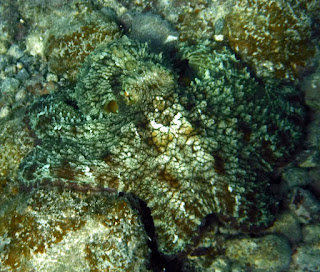 |
| Octopus transition complete |