|
At Lago Chungara, at 15,100 feet.
Parinacota Volcano in the background (20, 827 ft.) |
Putre is a small village of almost 2000 located in the mountains of Peru.
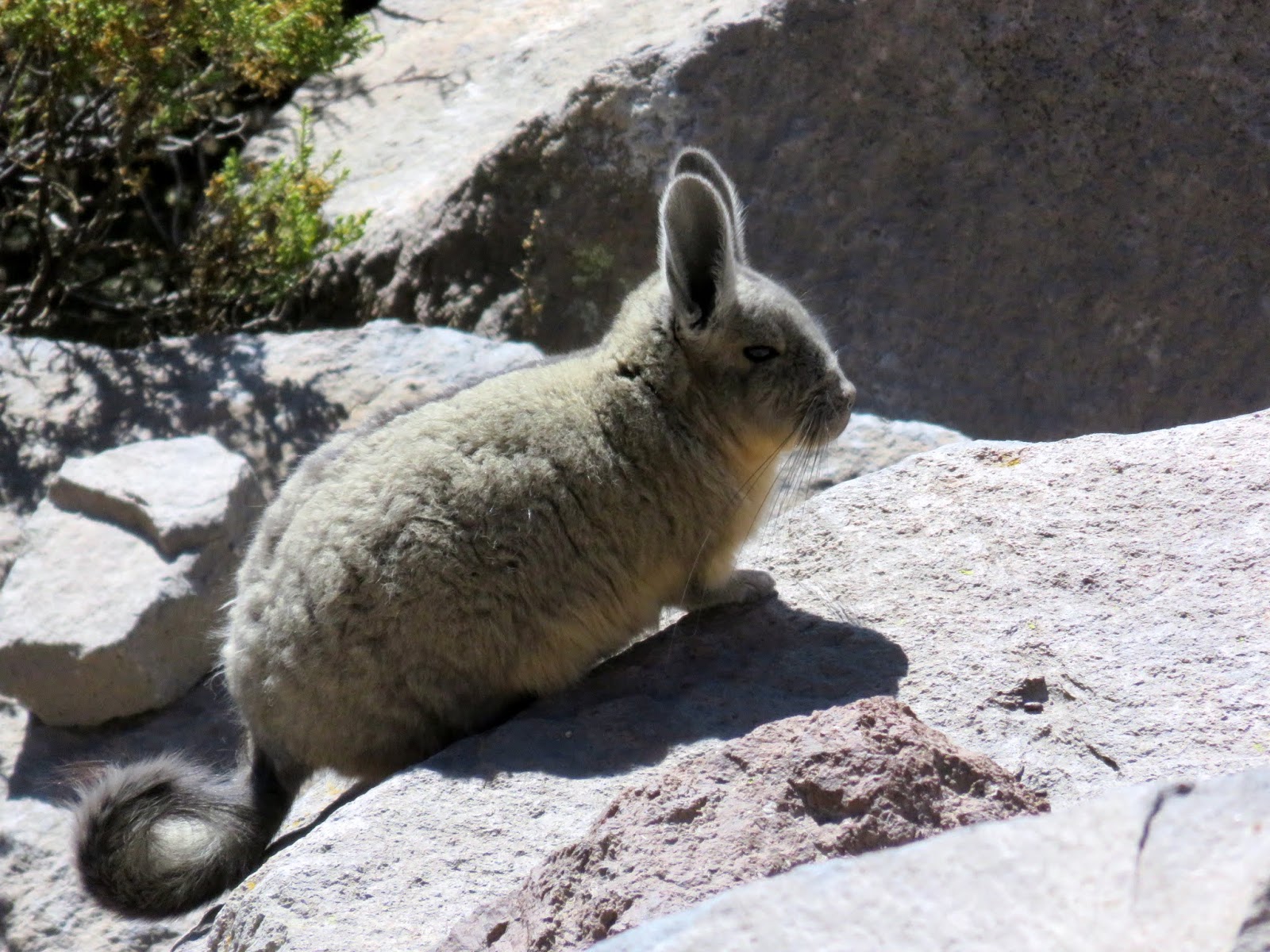
Staying at the Travel Lodge near the edge of town, it was easy to move around the usually deserted streets for restaurants and small markets to buy food for our road trips in the nearby park. Putre is the jumping-off spot, and acclamation point, for people wanting to hike or simply drive around to explore the nearby Parque Nacional Lauca. The park is home to dramatic landscapes, with snow-covered mountains and colorful, painted-desert hills. Wildlife ranges from the petite vicuna to their relations the alpaca and llama, and then the viscacha, a rabbit-like rodent living among the rocks. Flamingos, Andean Geese, Giant Coots and Andean Seagulls were seen walking on the icy lakes and streams in the area. Even though we knew that flamingos make their home in this area, the first time we saw them walking on the edge of a frozen lake, there was a disconnect. Flamingos "summer" in this Chilean mountain area by the thousands December through March, but there were
 |
| Lagunas Cotacotani |
still a few around at Lago Chungara and in other regions in the park during our July visit.
Visiting during the early winter, our evening temperatures were in the teens at night and warmed up to the 50s during the day in the valley in Putre. On departing the valley, temperatures dropped as we climbed in altitude. Over 3 days, we explored the park and tried to locate as much of the wildlife as possible. We didn't have any luck with the exotic wildlife like the puma or rheas, but the views in our travels were amazing.
Parinacota, a tiny village of 18 located inside the park, is home to a white-washed church built in 1789. During our visit, we didn't see a single person but llamas grazed in the fields on the edge of the village with the volcano in the background, beautiful.
Luckily, prior to returning to the Arica, our host at the Lodge was able to sell us a few gallons of gas. We had not realized there was nowhere to buy gas or that we would drive hundreds of miles exploring the park, emptying our tank. With the closest gas station back along the coast, he sold us some of his private inventory so we would be able to make the drive without incident.
 |
| Geoglyphs of the Lluta Valley |
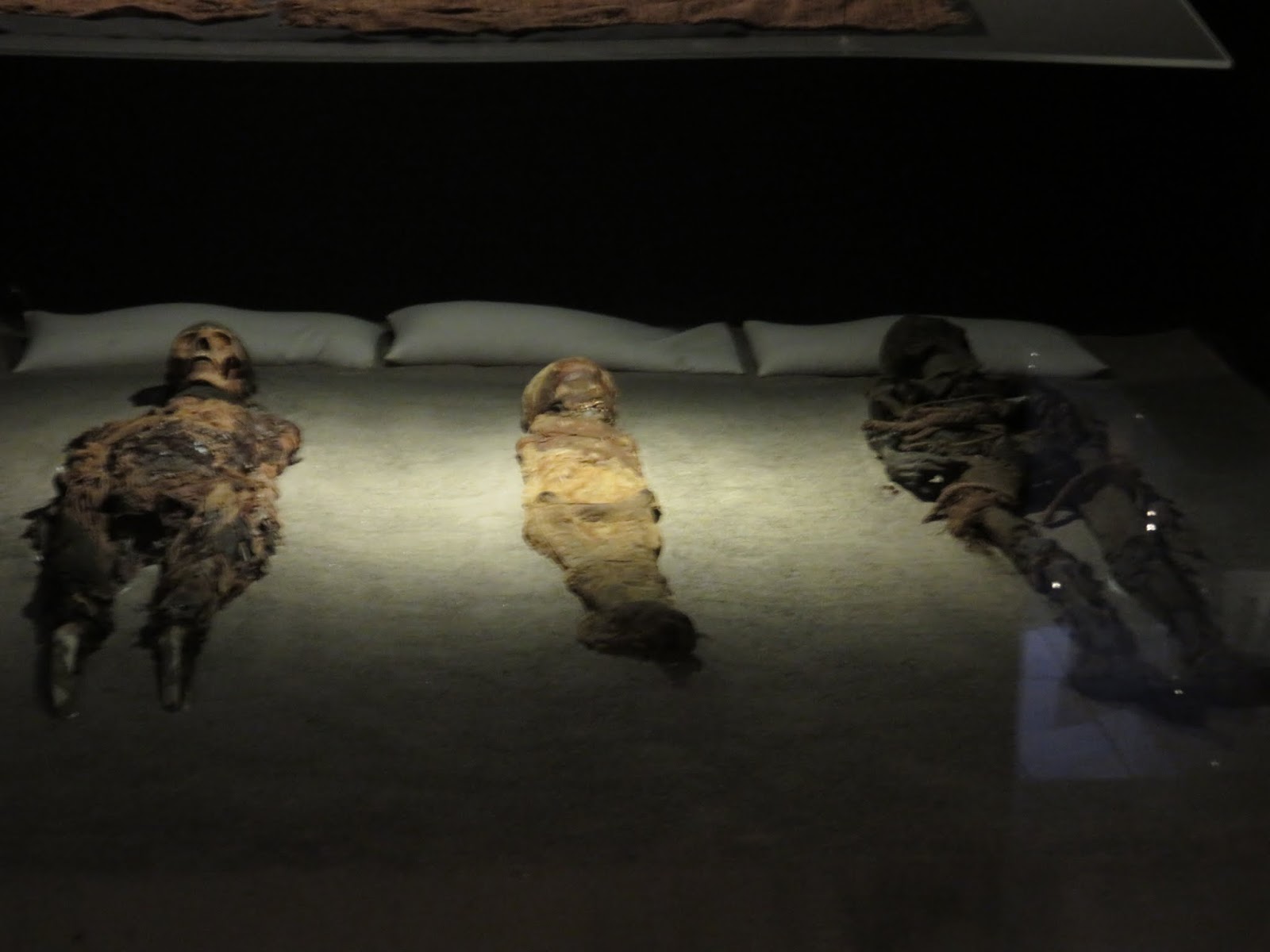
On our return to Arica, we made stopped to see the Chinchorro mummies at the Museo Arqueológico San Miguel de Azapa on the outskirts of the city. They are the oldest known mummy remains in the world, with dates going back to 7020 BC, thousands of years before the first known Egyptian mummies. Northeast of the city, we stopped to see the well-preserved geoglyphs of the Lluta Valley, thought to have been created somewhere between 600-1500 AD.
After an overnight stay in Arica, we headed to Antofagasta.
 |
| Overview of Putre |
 |
| Vicuna |
 |
| Parinacota Volcano in foreground and Pomerape Volcano behind it |
 |
| At Lago Chungara looking toward the Bolivian border |
 |
| Alpaca |
 |
| In the village of Parinacota |
 |
| Church in Parincota |
 |
| Llama with volcanoes in the background |
 |
| Viscacha |
 |
| Lower elevation in the park with some unfrozen water for the flamingo |
 |
| Chilean flamingo |
 |
| Icy watershed along the roadside |
 |
| More vicuna, we saw hundreds of these delicate looking animals |
 |
| Llamas at Lago Chungara |
 |
| Alan on a short hike. You can see the frozen stream, but not the 40 mph winds with the 30-degree temperature. We simply didn't have the proper clothing for this type of weather. | | |
 |
| Heading back to Arica |
 |
| Mummies |